

Designing for Real People
What stayed with me after two days inside the future of learning, AI, and experience design in London.

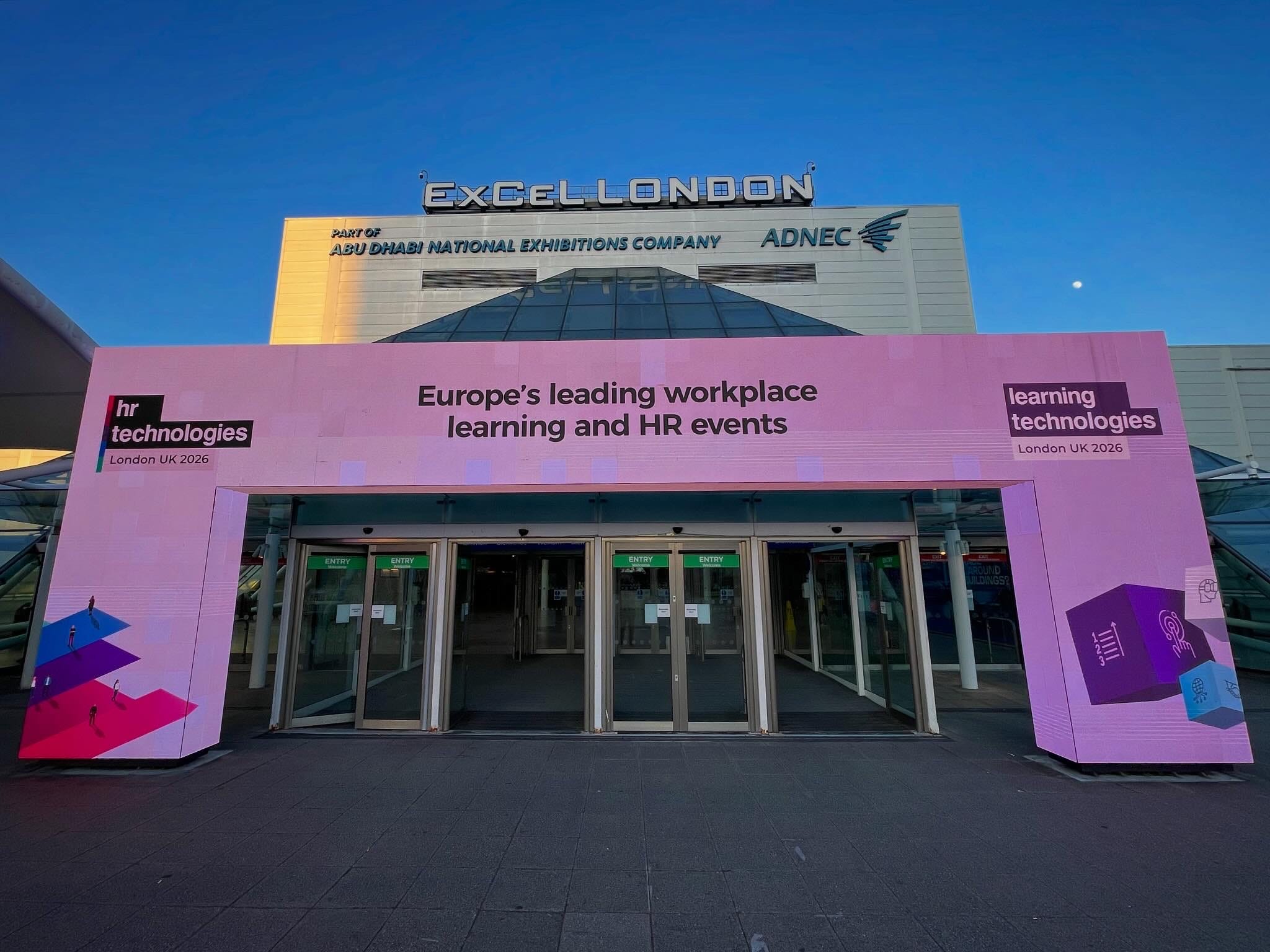
Last week, I shared a pair of dispatches from the Learning Technologies Conference in London — one focused on AI, immersive learning, and emerging tools, the other on leadership, engagement, and the human side of learning. Now that I’m home, back in routine, and a week removed from the noise, I’ve noticed something interesting: the ideas that stayed with me weren’t really about technology at all.
For two straight days, AI was everywhere.
Every booth. Every keynote. Every conversation.
Faster tools. Smarter systems. Automated workflows. AI-generated modules. AI-generated quizzes. AI-generated videos. Entire learning experiences assembled from a prompt and a PDF in under five minutes.
And honestly? Some of it was impressive.
But somewhere in the middle of the exhibition floor — trying to half-listen to a seminar while surrounded by flashing demos, AI promises, and the general hum of corporate optimism — I realized the most important shift wasn’t technological.
It was human.
That became the thread connecting almost every meaningful session I attended.
Not:
“How do we create more content?”
But:
“How do we create learning that actually works for real people?”
That’s a very different question.
One of the keynote speakers framed it this way:
“People aren’t vending machines.”
You can’t simply insert:
information
incentives
compliance modules
mandatory training
…and expect predictable output.
People are messier than that.
They’re distracted.
Overloaded.
Emotional.
Skeptical.
Busy.
Curious.
Burnt out.
Motivated by completely different things depending on the day.
Which means learning design can’t just be about delivering information anymore.
It has to account for:
behaviour
environment
emotion
trust
relevance
attention
meaning
That idea kept resurfacing throughout the conference in different forms.
One speaker talked about “playfulness” in adult learning. Not in a childish way, but as a mechanism for psychological safety and engagement. Another spoke about immersive learning and how the value isn’t the technology itself, but the ability to place someone into a meaningful situation where decisions matter. Even the AI-focused sessions kept circling back to the same realization: generating content is getting easier, but creating something thoughtful, useful, and human is still difficult.
That distinction matters.
Because content is quickly becoming commoditized.
There are now dozens of platforms capable of generating lightweight learning modules in minutes. Some are surprisingly good. Most are “good enough.” And that phrase — good enough — stuck with me too.
The barrier to creating content is dropping fast.
Which means the value is shifting elsewhere.
Toward:
experience design
storytelling
judgment
facilitation
behavioural understanding
knowing when something should feel simple, playful, serious, immersive, or human
In other words:
the edge is no longer the tool.
It’s the thinking behind it.


One of the more interesting moments for me came while walking the exhibition floor.
At the same time I was hearing presenters talk about:
personalization
learner-driven pathways
interactive decision-making
…I realized we were already touching some of these ideas in a current project back home.
Not through traditional eLearning, but through a branching, personalized experience where users guide themselves based on their own needs and pain points.
That was a bit of a lightbulb moment.
Because it reinforced something I kept hearing all week:
people engage more deeply when they feel like they have agency inside the experience.
Not just:
“Click next.”
But:
“What would you do?”
That’s a fundamentally different design philosophy.
And maybe that’s the clearest takeaway I brought home from London:
Learning is shifting:
from content
to experience
to real-world behaviour
Not:
“Did they complete it?”
But:
“Did anything actually change?”
That’s a harder problem to solve.
But it’s also a far more interesting one.
There was something strangely reassuring about being surrounded by thousands of people discussing AI nonstop, only to keep arriving at the same conclusion: the human layer still matters most.
Maybe more than ever.
At Orbit, that’s increasingly how I think about creative work too. Not just what we make, but how it lands, how it feels, and whether it actually connects with the people on the other side of it.
Because in the end, we’re not designing for roles. We’re designing for real people.