

When the Idea Escapes the Ad
The best campaigns don't just communicate a product benefit. They build an entire world around it.

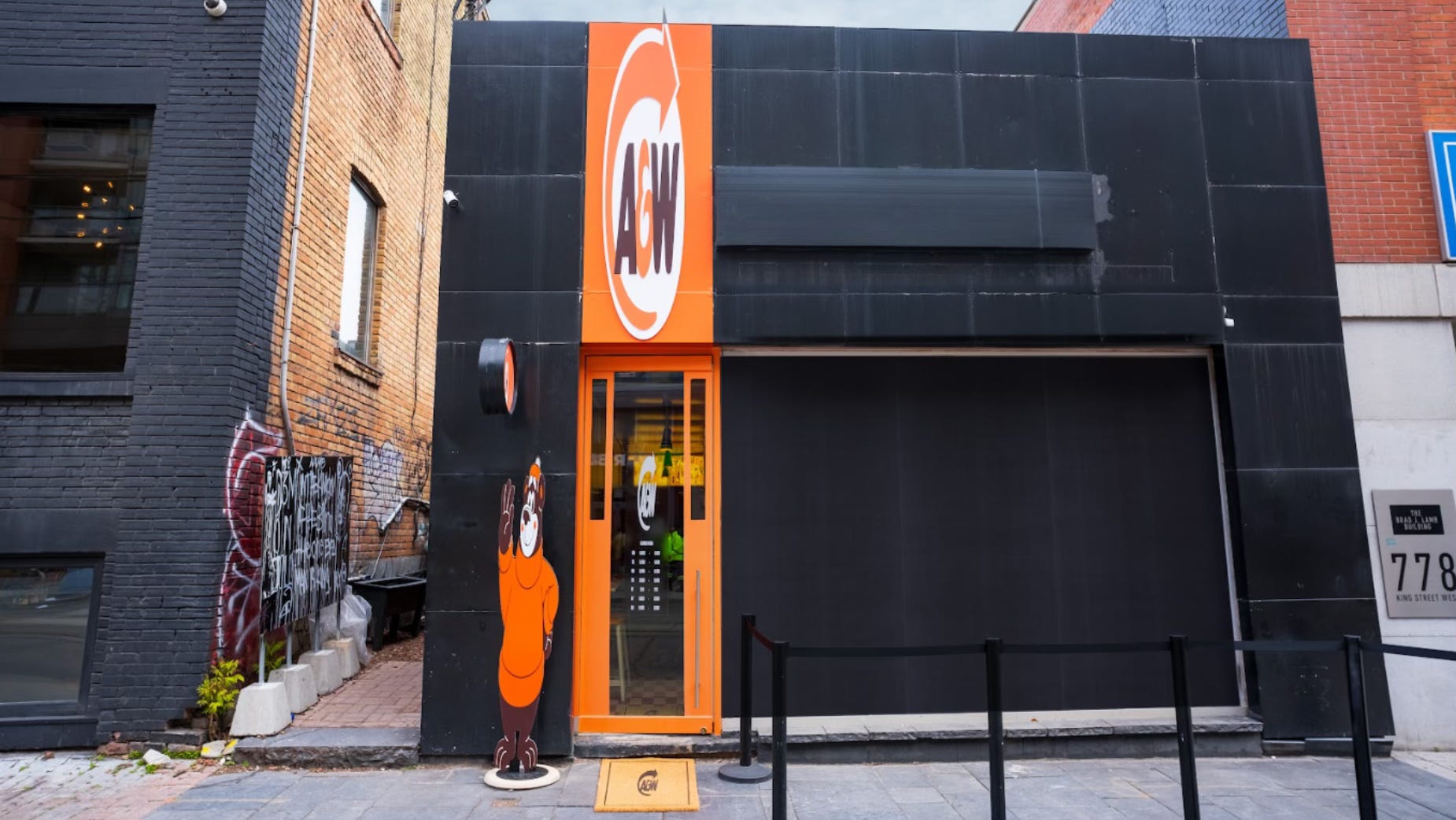
Every once in a while, a piece of marketing stops me mid-scroll. Not because it has a celebrity attached to it. Not because it spent millions on production. Simply because it commits so completely to a single idea that you can't help but admire it. A&W Canada's recent smash burger launch was one of those moments. The more I looked at it, the less interested I became in the burger itself and the more interested I became in the idea behind it.
A lot of marketing today feels remarkably cautious.
Campaigns are tested, refined, optimized, and then optimized again. By the time they reach the public, they’ve often become a collection of safe decisions rather than a singular creative idea.
Which is why A&W’s smash burger launch feels so refreshing.
They didn’t just introduce a new menu item. They asked a simple question:
What if we smashed everything?
Not just the burger.
Everything.
The logo. The trays. The restaurant. The signage. Even the iconic frosted root beer mugs.
If you haven’t seen the activation, A&W transformed a narrow retail space into a fully “smashed” restaurant experience. Every visual element appeared compressed and squished, as though the entire brand had been flattened by the same spatula used to make the burger.


Somewhere, a marketing team is probably still debating whether a larger coupon would have done the trick. A&W decided to smash an entire restaurant instead.
It’s funny. It’s weird. It’s instantly understandable.
And that’s precisely why it works.
Too often, marketers confuse complexity with sophistication. The truth is that some of the strongest ideas can be explained in a single sentence.
Everything gets smashed.
That’s the campaign.
No lengthy explanation required. No strategy deck needed. The public understands it immediately.
The best ideas often have this quality. They survive contact with reality because they don’t rely on someone explaining them first.
As a creative director, that’s something I think about constantly.
We spend a lot of time discussing messaging, positioning, storytelling, and brand architecture. All important things. But sometimes the most powerful work comes from taking a simple product truth and committing to it completely.
That’s what happened here.
The smash burger wasn’t merely a menu item. It became a creative system.
And that distinction matters.
One of the themes I’ve written about repeatedly in DesignNova is that great brands aren’t logos. They’re systems.
The London Underground isn’t memorable because of a roundel. The Olympic Games aren’t iconic because of five rings. Penguin Random House didn’t unlock new creative possibilities by redesigning a penguin logo; they created an entire illustration system around it.
The strongest brands create frameworks that can stretch across experiences, products, campaigns, and touchpoints while still feeling unmistakably themselves.
A&W did exactly that.
The smashed logo wasn’t a gimmick. It was evidence that the creative team had identified a central idea and applied it consistently across every part of the experience.
That’s where so many campaigns fall short.
A product gets launched. A slogan gets written. Some social posts get produced. Maybe a video gets made. But the idea never leaves the ad.
This one escaped.
It became a place people wanted to visit, a thing people photographed, and a story people shared. In a world where attention is increasingly difficult to earn, that’s valuable.
What I admire most is the restraint.
The campaign could have become complicated very quickly. Someone could have added layers of messaging. Someone could have insisted on explaining the concept. Someone could have cluttered it with secondary ideas.
Instead, they trusted the audience.
Smash burger. Smashed restaurant.
Done.
There’s confidence in that simplicity.
Of course, credit also belongs to A&W itself. One reason this works is because A&W Canada has spent years building a brand that’s willing to have fun. Their advertising rarely feels corporate. It feels distinctly Canadian, self-aware, and comfortable leaning into an idea when they find a good one.
That matters.
Great creative work rarely happens when every decision is filtered through fear. Agencies deserve credit when they bring bold ideas to the table, but clients deserve credit too when they’re willing to buy them.
One final observation.
Ironically, the most impressive part of this campaign isn’t the smashed restaurant.
It’s the fact that we’re talking about it.
A smash burger is ultimately a limited-time product. It may stay. It may disappear. But the idea has already done its job.
People noticed.
People shared it.
People remembered it.
And in marketing, that’s often the hardest part.
At Orbit, I spend a lot of time thinking about brands, campaigns, and creative systems. But every once in a while, a piece of work comes along that serves as a reminder that great marketing doesn’t always start with a complicated strategy. Sometimes it starts with a simple idea and the courage to follow it further than anyone else. This was one of those ideas.